
The Ultimate Guide to an Inclusive, Arts-and-Culture-Filled Getaway in The Palm Beaches
I am a disability advocate and creator. My mission is all about showing that the world belongs to all of us. I am also a disabled influencer on Instagram at @justcpnotspecial.
Travel should not feel like a test. It should not feel like a puzzle you have to solve before you even leave home, and it definitely should not feel like something only certain bodies get to enjoy comfortably.
As someone who’s lived with cerebral palsy my whole life, I know how quickly the smallest barrier can change the entire rhythm of a trip. A single step in a shower can turn a “fully accessible” room into a stressful surprise. A beautiful historic building can become impossible to enjoy if the only entrance consists of a staircase. A packed, noisy attraction can go from exciting to overwhelming in minutes. That is why accessibility matters so much to me, and why I notice immediately when a destination is making a real effort to do better. My fondest wish is the same as that of the 70 million disabled Americans: to experience the world without unnecessary barriers.
That is exactly why my home, The Palm Beaches, has completely captured my heart for the way it is turning the vision of inclusive tourism into reality. Yes, the scenery is gorgeous. Yes, the mix of art, history, water, and culture is enough to tempt anyone. But what really stands out is the growing commitment to making the destination easier to experience for more people. Discover The Palm Beaches, the region’s official tourism organization, has made accessibility a clear priority through partnerships and training, including becoming a Certified Autism Center™ and working with Wheel the World to improve travel information and planning support. That matters because accessibility is not just about compliance. It is about confidence. It is about helping people feel prepared, welcomed, and included before they even arrive.
If you are planning a trip through an arts-and-culture lens, The Palm Beaches offer a place where accessibility and inspiration can genuinely coexist. You can spend the day moving between art museums, historic estates, marine life centers, sensory-friendly experiences, and the shoreline without feeling like you are constantly negotiating every detail. That does not mean every corner of the destination will be perfect for every person, because accessibility is never one-size-fits-all. But it does mean there is real momentum here, and that is worth celebrating.
A smooth trip starts with a smooth arrival, and I always pay attention to that because first impressions matter. If you are flying in, President Donald J. Trump International Airport highlights accessibility resources for travelers with disabilities and participates in the Hidden Disabilities Sunflower program, which offers a discreet way for passengers with non-visible disabilities to signal that they may need extra time, patience, or support. Programs like that can make an airport feel less intimidating and far more human.

Once you land, getting around can be far less stressful than you might expect. I have taken the Brightline often throughout Florida, and it is one of the few travel experiences that consistently makes me feel genuinely looked after. The stations feel modern and easy to navigate, the ride is comfortable, and little things like spacious seating, Wi-Fi, and level boarding make the whole experience feel smoother from start to finish. That level boarding can make a huge difference for wheelchair users and anyone who values an easier transition on and off the train. For more tailored support, Palm Tran Connection provides shared-ride, door-to-door paratransit for eligible riders and ADA-eligible visitors. Having those different options in place means you can build a trip around what feels easiest for you instead of forcing yourself into a one-size-fits-all plan.

When I travel, I want at least one anchor experience that feels beautiful, memorable, and easy to enjoy at my own pace. In The Palm Beaches, that would absolutely be the Norton Museum of Art. The museum has the kind of calm, spacious atmosphere that lets you settle in instead of bracing yourself. It is elegant without feeling intimidating, and its collection spans American, Asian, contemporary, European, and photography, which makes it easy to spend a full afternoon there without getting bored. And honestly, I love that you can break up your visit with lunch at The Restaurant at the Norton, which overlooks the Pamela and Robert B. Goergen Garden. One of my favorite things to eat at the restaurant is their famous Norton Burger.
What makes the Norton Museum of Art especially appealing for an accessibility-focused itinerary is not just the art itself, but the overall experience. The museum’s public programming includes sensory-friendly offerings, and its visitor information emphasizes creating a safe, inclusive, welcoming environment. For me, that signals something important: accessibility is not being treated as a side note. It is part of how the institution welcomes people and plans the experience. That mindset changes the energy of a visit in the best way.

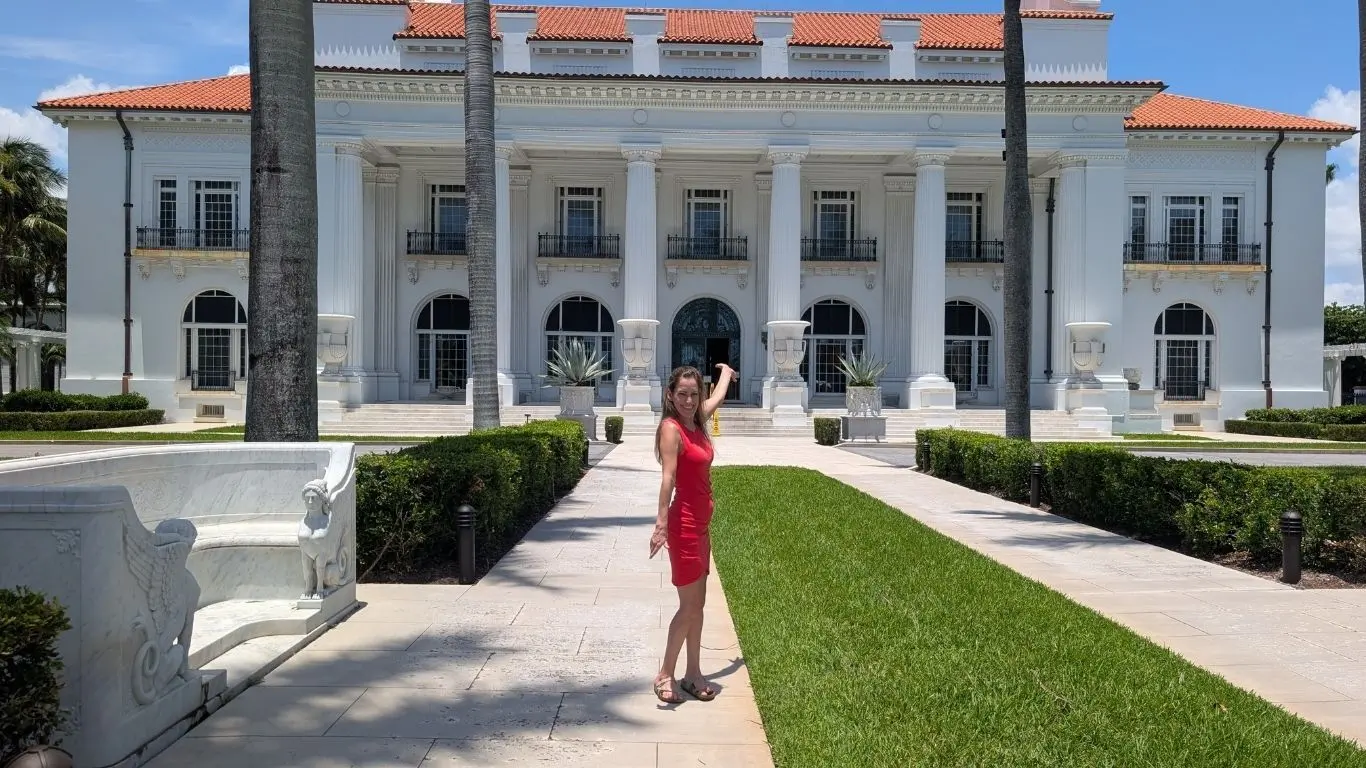
For a completely different mood, the Flagler Museum gives you all the grandeur of Gilded Age Palm Beach with accessibility features that help make the experience more approachable. Public visitor information notes ramps and an elevator for wheelchair access, and there is also a closed-captioned video for visitors who cannot board Flagler’s private railcar. I love when a historic institution shows that preserving the past and improving access do not have to be in conflict. You can admire the architecture, the drama, and the history without feeling like the building was never meant for you.
Of course, culture is not limited to paintings and historic rooms. Some of the most meaningful travel moments happen in places where learning, science, and nature come together, and The Palm Beaches have several options that feel especially thoughtful for visitors who benefit from more flexibility or sensory support.

The Cox Science Center and Aquarium is one of those places that feels genuinely fun the minute you are inside. What I like about it is that there is a lot to explore without it all hitting you at once—the Aquariums of the Atlantic are beautiful, the exhibits are hands-on in a way that keeps the visit engaging, and the outdoor Fisher Family Science Trail gives the day a nice change of pace. That sense of variety seems to be what so many visitors respond to as well, along with how interactive and family-friendly the center feels.
On top of that, the science center hosts Sensory Saturdays with special early hours, softened lighting, lower noise levels, reduced visual stimulation on interactive exhibits, and sensory kits available on request. It is also described as ADA accessible and wheelchair friendly, which makes the whole experience feel more thoughtfully planned from the start.

The Loggerhead Marinelife Center is one of those places that really stays with you. What I love about it is that it is all about sea turtles, so the experience feels both meaningful and memorable from the moment you arrive. Seeing the rehabilitation work up close makes the visit feel special in a way that goes beyond a typical attraction, and that seems to be exactly why so many people leave talking about how inspiring and educational it is. I also love that you can symbolically adopt a sea turtle patient through the center, which is such a lovely way to support the care, treatment, and eventual release of injured turtles back into the ocean. Its accessibility information mentions handicap parking, paved walkways, wheelchairs available on request, beach wheelchairs with advance notice, and quieter guided tour options for visitors who may benefit from a less intense environment. It is primarily an outdoor facility, so there can still be variables, but I appreciate how transparent the center is about what it offers and where visitors may encounter challenges.
