Property Tax Amendment: Potential Impact on Arts & Culture in Palm Beach County
What Amendment 3 Could Mean for Florida
Based on the constitutional amendment approved by the Legislature for the November 2026 ballot (Amendment 3), voters will be asked to consider a substantial expansion of Florida’s homestead exemption, potentially reducing local government revenues and creating a framework for future elimination of much of the non-school property tax on homesteads. The proposal would raise the homestead exemption from $50,000 to $150,000 in 2027 and $250,000 in 2028 if approved by 60% of voters.
The arts sector relies heavily on county and municipal investment, so any significant decline in property tax revenue could affect cultural funding, public facilities, special events and quality-of-life initiatives. The Cultural Council believes it is important for the sector and the general public to understand how local government funding supports arts and culture.
At a Glance
How Local Government Funding Supports Arts & Culture
Property taxes are a major source of revenue for counties and municipalities. These revenues help fund public services, community facilities, parks, libraries, cultural venues and grant programs. Significant reductions in local revenues will require elected officials to reevaluate spending priorities.
Property taxes support local services
Property tax revenues help fund public services, community facilities, parks, libraries, cultural venues and grant programs.
Arts funding is often considered discretionary
While public safety, infrastructure and legally mandated services are generally protected, cultural investments are frequently considered discretionary expenditures during budget reductions.
Potential impacts extend beyond grants
Arts programs are also funded by special taxing districts such as CRAs, DDAs and the Children’s Services Council. Potential impacts may include cultural grant programs, public art, special events, cultural facilities, community partnerships and arts education programs.
What Could Be at Risk in Palm Beach County if Local Government Revenues Decline?
Legislative analyses project Amendment 3 could reduce local government revenues statewide by $4.6 billion initially, growing to $8.4 billion annually. Palm Beach County, as one of Florida’s largest tax bases, is projecting annual revenue losses of $324 million once the amendment phases in—a reduction of more than 38% in current operating revenue.
At the municipal and special-district level, projected impacts include a $31.8 million annual budget loss for West Palm Beach, a publicly estimated $16.7 million annual loss for Boca Raton by year two, and an estimated $26 million annual budget reduction for the Children’s Services Council. The Florida League of Cities has also projected that South Bay could lose 99% of its tax base.
Reductions of this scale could create difficult budget decisions for counties, municipalities and special districts that invest in arts, culture, parks, libraries, tourism and other quality-of-life services.

What Will Happen to Arts & Cultural Funding if the Property Tax Amendment Passes?
As the County’s designated Local Arts Agency, the Cultural Council is contracted with Palm Beach County to administer a small grant program that distributes approximately $400,000 in ad valorem taxes annually to small or emerging cultural organizations. The Category C-I Cultural Development Fund supports cultural heritage and traditions, cultural opportunities for children and youth, and culturally diverse, innovative and excellent programs and projects. The Cultural Council believes this program offers critical support for smaller organizations and is a gateway toward eligibility for tourism grants and larger funding opportunities. This grant will be at risk if Amendment 3 passes.
The Cultural Council is also contracted by Palm Beach County’s Tourist Development Council to administer a portion of locally generated bed taxes through Category B and Category C-II grants for large and mid-sized cultural organizations. These grants support tourism efforts by funding marketing and some program expenses associated with top-tier performances, exhibitions and events. Although bed taxes are not included in Amendment 3, there is concern that, if the amendment passes, this funding could be at risk in the future.
Using data from its 63 grantees in 2025-2026, the Cultural Council found that 23 organizations received nearly $1.8 million in local government funding outside the Council’s grant programs. This support came from county departments, municipalities and special districts such as DDAs, CRAs, the Children’s Services Council and others. About 68% of the funding went to larger cultural organizations, such as The Society of the Four Arts, Arts Garage, the Henry Morrison Flagler Museum, Boca Raton Museum of Art and others. These figures do not include additional support from county and city partners such as free or reduced-cost rental space, free parking, beach access, maintenance and other in-kind services.
Reported Local Government Funding Potentially at Risk
Survey responses from Cultural Council grantees. Total reported county and municipal funding: $1.8 million.
| Organization category | Funding | Percent of total |
|---|---|---|
| Community-Based Arts Organizations | $182,265 | 10.1% |
| Major Cultural Institutions | $1,225,401 | 68.2% |
| Mid-Sized Cultural Organizations | $389,450 | 21.7% |
A Statewide Picture
Through a public records request to the Florida Division of Arts & Culture (DAC), the Cultural Council conducted a similar statewide analysis. Of the 680 organizations that applied for state grants in 2026, applicants reported a combined $195.1 million in local government support. In Palm Beach County, 50 applicants reported $11.2 million in local government support.
The following charts show a five-year analysis of DAC applicants in Florida and Palm Beach County. State grant applications do not break out Tourist Development Tax funding from local government support. In Palm Beach County, the Council estimates approximately $7 million of the $11.2 million reported in local government support is funded through bed tax collection.
Florida Statewide – Local Government Support ($ Millions)
| Year | Value |
|---|---|
| 2022 | $152M |
| 2023 | $122M |
| 2024 | $158M |
| 2025 | $238M |
| 2026 | $195M |
Palm Beach County – Local Government Support ($ Millions)
| Year | Value |
|---|---|
| 2022 | $9.5M |
| 2023 | $10.0M |
| 2024 | $7.1M |
| 2025 | $10.4M |
| 2026 | $11.2M |
Florida Statewide – Organizations
| Year | Value |
|---|---|
| 2022 | 519 |
| 2023 | 562 |
| 2024 | 583 |
| 2025 | 633 |
| 2026 | 680 |
Palm Beach County – Organizations
| Year | Value |
|---|---|
| 2022 | 41 |
| 2023 | 46 |
| 2024 | 49 |
| 2025 | 50 |
| 2026 | 50 |
The Potential “Double Impact”
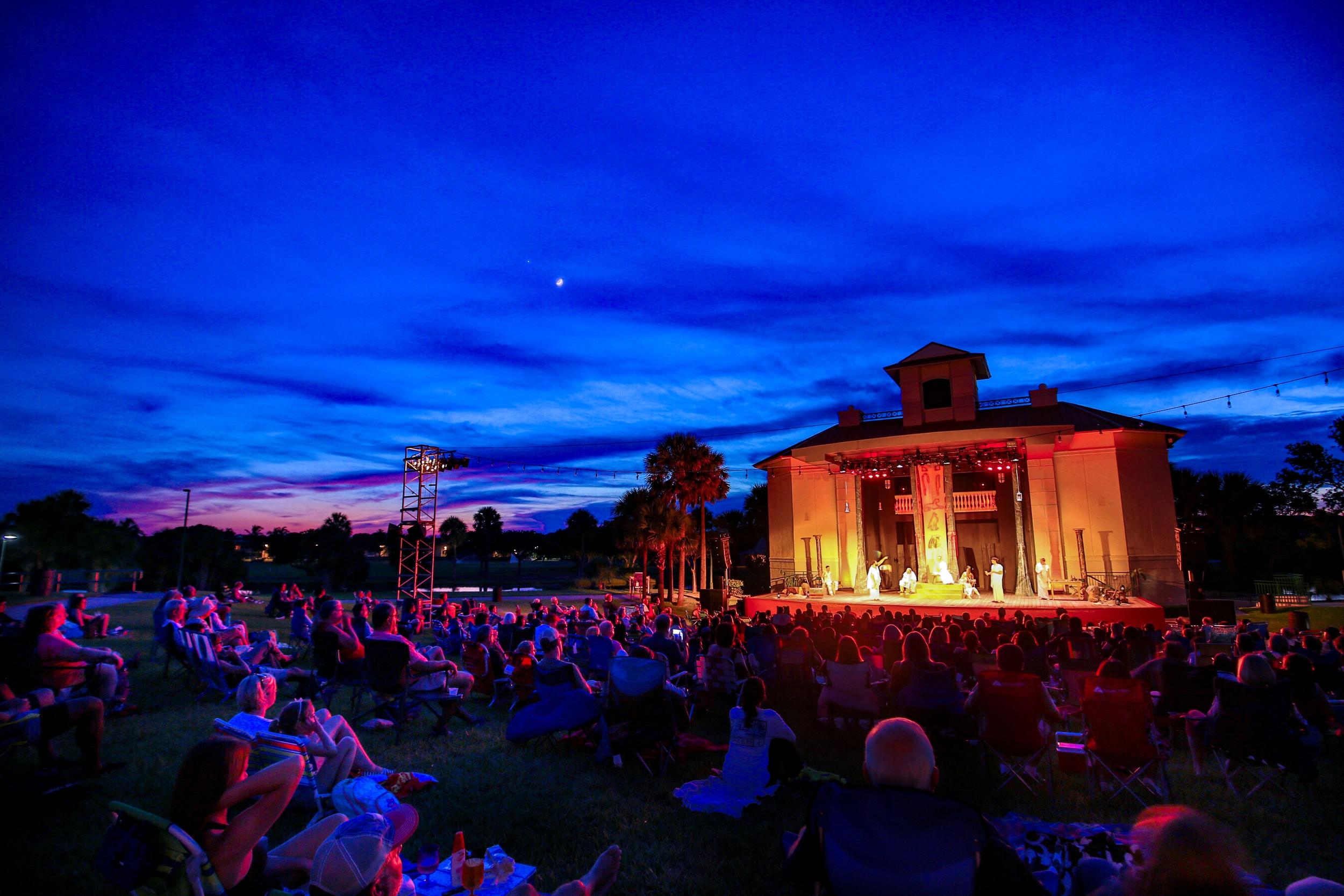
Palm Beach County’s quality of life is supported by cultural institutions, museums, theaters, festivals, arts education programs, public art and historic sites. These community assets help attract visitors, businesses, talent and investment.
Annual economic impact generated by Palm Beach County’s nonprofit arts and cultural sector, according to the Arts & Economic Prosperity 6 study.
According to the Arts & Economic Prosperity Study (AEP6), the arts sector generates $335.3 million in economic impact, supports 4,360 jobs and attracts nearly 4 million residents and visitors annually.
At the same time, cultural organizations are facing a potential “double impact”: declining access to state funding while local government revenues may also be constrained. The state’s grant program has not recovered since the 2024–25 veto, and Palm Beach County’s state arts funding has dropped 66% over four years. In 2026–27, Palm Beach County organizations submitted more than $5.4 million in qualified Culture & Museum Grant requests, but only $1.6 million was approved for funding.
Total Final Funding by Year
| Fiscal year | Final State Funded ($) | Final PBC Funded ($) |
|---|---|---|
| 2023-2024 | $43,252,101 | $4,828,339 |
| 2024-2025 (Veto) | $0 | $0 |
| 2025-2026 | $21,000,000 | $1,900,000 |
| 2026-2027 | $20,000,000 | $1,605,390 |
Toolkit & Additional Resources
Use these resources to learn more about Amendment 3, understand its potential impact on arts and culture, and help communicate what’s at stake in Palm Beach County.
- Advocacy Brief: A deeper look at the potential impacts of Amendment 3 on arts and culture in Palm Beach County.
- Arts & Culture Fact Sheet: A one-page overview of key facts and potential impacts to share with your community.
- Email Template: Customizable language for communicating with your organization’s supporters and stakeholders.
- Talking Points: Key messages, data, and answers to common questions for conversations about Amendment 3.
- Social Media Graphics & Captions: Graphics for both cultural organizations and artists to use on their channels with suggested captions.
Select Advocacy Alerts when choosing your email preferences.
Additional Resources
- Florida League of Cities: Florida Formula: Property Tax Educational Toolkit
- Florida Association of Counties: Report on Florida County Property Taxes
- Florida Nonprofit Alliance: Proposed Property Tax Amendment Resource Center
- Florida TaxWatch: Florida Property Tax Resource Center